
In the decades after the Civil War, emancipation, constitutional amendments, and federal legislation, black men voted for the party responsible for each of those developments–the Republican–and against the party that was linked to slavery, efforts at disfranchisement, and the new wave of segregation, among other problems.
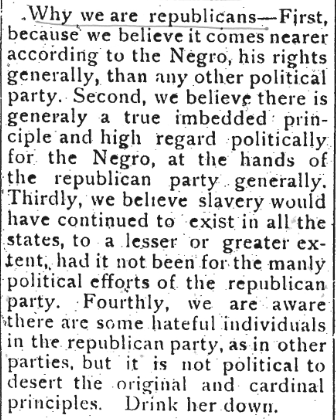
Topeka (Kansas) State Ledger, August 24, 1894
African American support for the party of Lincoln and emancipation continued into the twentieth century as the country elected five Republicans to the presidency (Theodore Roosevelt, William Howard Taft, Warren Harding, Calvin Coolidge, and Herbert Hoover).
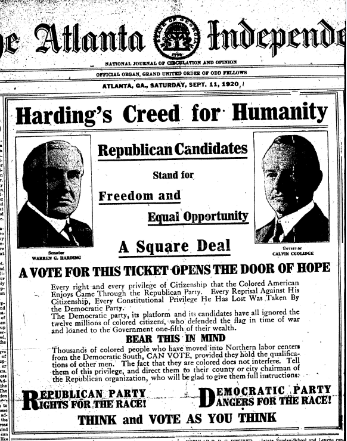
Atlanta Independent, September 11, 1920 (See also Indianapolis Freeman, October 16, 1920)
Nevertheless, black newspapers–like blacks in general–found themselves wondering about the value of their support for a party that took verbal stands but demonstrated little action in protecting African American lives and rights.
Numerous editorials and editorial cartoons called attention to stands that left blacks battling alone against the many problems that white racism created for them (covered in “Burdens and Responses”). For some editors, the situation was drastic enough to consider voting Democratic, the pre- and post-Civil War party of southern whites–and thus of slavery, segregation, disfranchisement, debt peonage, lynching, etc. Such a suggestion prompted vehement objections from most editors.
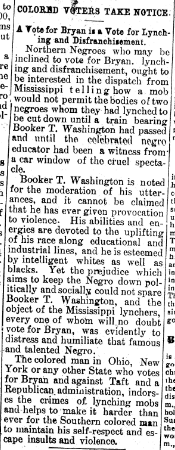
Savannah Tribune, October 24, 1908 (double check)
The Washington Bee on October 17, 1908, asserted that the 122 lynchings in the previous two years were all “committed in States where Democratic control is absolute, from Governor down to the petty township official.” “Not one,” it emphasized, too place “in States governed by Republic officials and republican sentiment.”
Certainly, any acknowledgement from a president, even the Democrat Woodrow Wilson–who expanded segregation in the federal government–was worthy of attention and hope.
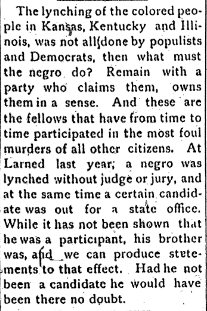
Topeka, Kansas, State Ledger, July 14, 1893
In the Midwest during the 1890s, some black newspapers were part of the national debate over a third-party challenger, the Populist or People’s Party, whose economic positions (such as “free silver” and a bigger national government role in the economy in general) threatened Republicans’ traditional policies. For some, economics was the key; for others, parties and racial burdens were inseparable.
