
A Democrat, New Jersey governor Woodrow Wilson, was not the presidential choice of African Americans in the 1912 election, although the choices were hardly slanted in favor of black voters as the choices included Theodore Roosevelt and William Howard Taft whom they linked to the Brownsville Affair and a general lack of action during their Republican presidencies to respect and protect black rights.
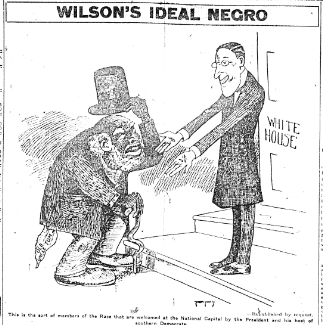
Chicago Defender, October 1, 1916
Once elected, Wilson confirmed doubts about him and his party by showing the racist Birth of a Nation in the White House and praising its historical accuracy and by expanding segregation into federal departments.
Once war was declared against Germany and its allies in April 1917, however, many black Americans eagerly sought to follow their president into a conflict for democracy. Nevertheless, the California Eagle, which seldom commented on the lynching ills of the southern states, noted on July 7, 1917–several weeks after the United States entered the Great War: “It is passing strange that our very own president, with all his zeal for a broader and greater humanity has never by word or act in so far as has been recorded, uttered one word against the murder lynching of human beings within our gates.”
